Benchmark & Empirical Study · 2026

Empowering Edge Agents A Systematic Analysis of Edge-Cloud Collaboration in LLM Agent Execution

When LLM agents take on long-horizon work in local workspaces, cloud help is interleaved throughout the trajectory. EC²-Bench evaluates four edge–cloud collaboration strategies on 128 executable tasks, jointly measuring task performance, resource usage, and privacy exposure.

  • 128executable tasks
  • 100privacy-annotated tasks
  • 3,385sensitivity units
  • 4collaboration strategies
  • Edge models: Qwen3.5-2B / 9B / 27B, Qwen3.7-Plus · Cloud model: GLM-5.3 · Agent harness: OpenClaw
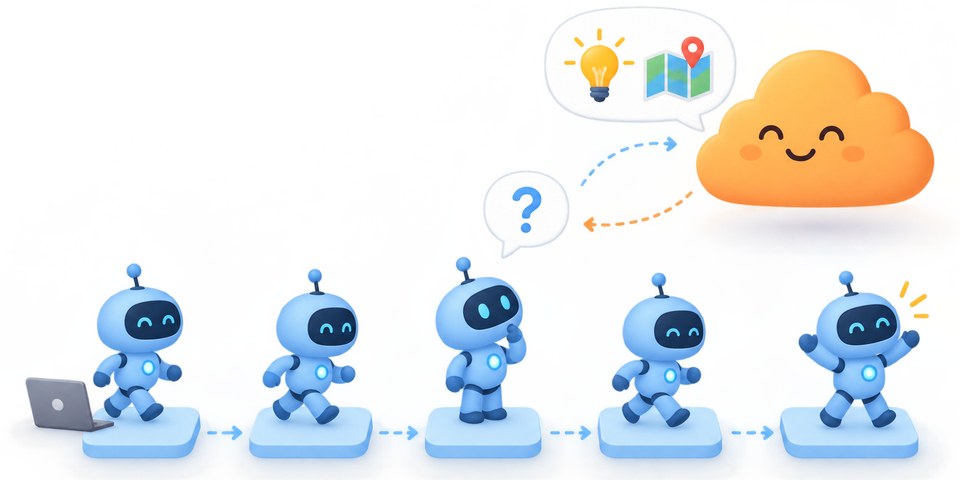
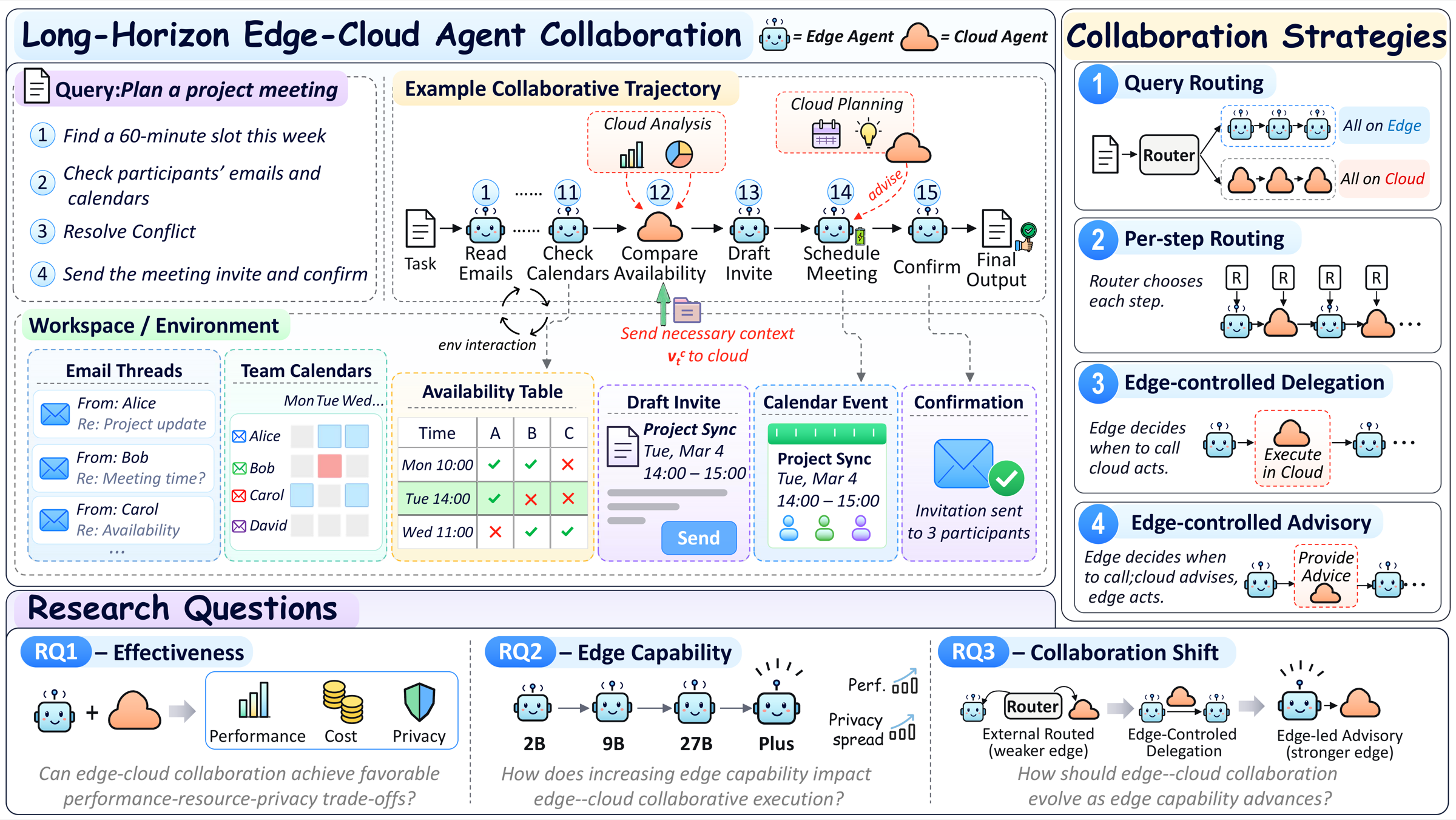
Overview of EC²-Bench: an example long-horizon workflow where edge and cloud agents take turns along one trajectory, four collaboration strategies (Query Routing, Per-step Routing, Edge-controlled Delegation, Edge-controlled Advisory), and three research questions on effectiveness, edge capability, and collaboration shift.
Overview. A representative long-horizon workflow in which edge and cloud agents take turns along one trajectory; the four collaboration strategies we study, which differ in who decides when the cloud joins and what it does once invoked; and our three research questions.
Takeaways

Key takeaways

01

Collaboration pays off for long-horizon agents

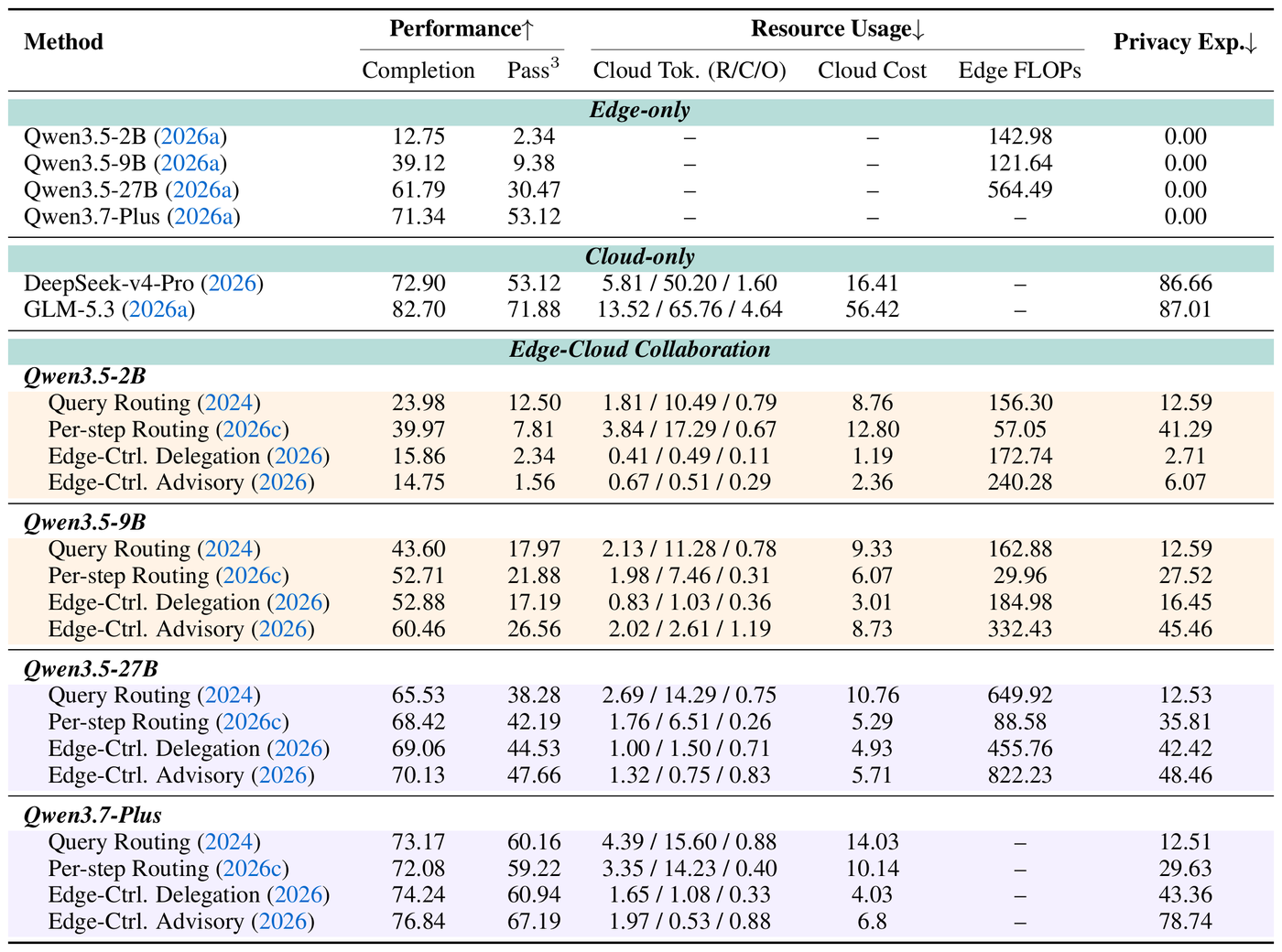
Bringing in the cloud only part of the time recovers substantial capability at a fraction of the cost: with Qwen3.5-2B, Per-step Routing lifts completion from 12.75 to 39.97 using only 22.7% of the cloud-only cost.

02

Stronger edges converge on performance, not privacy

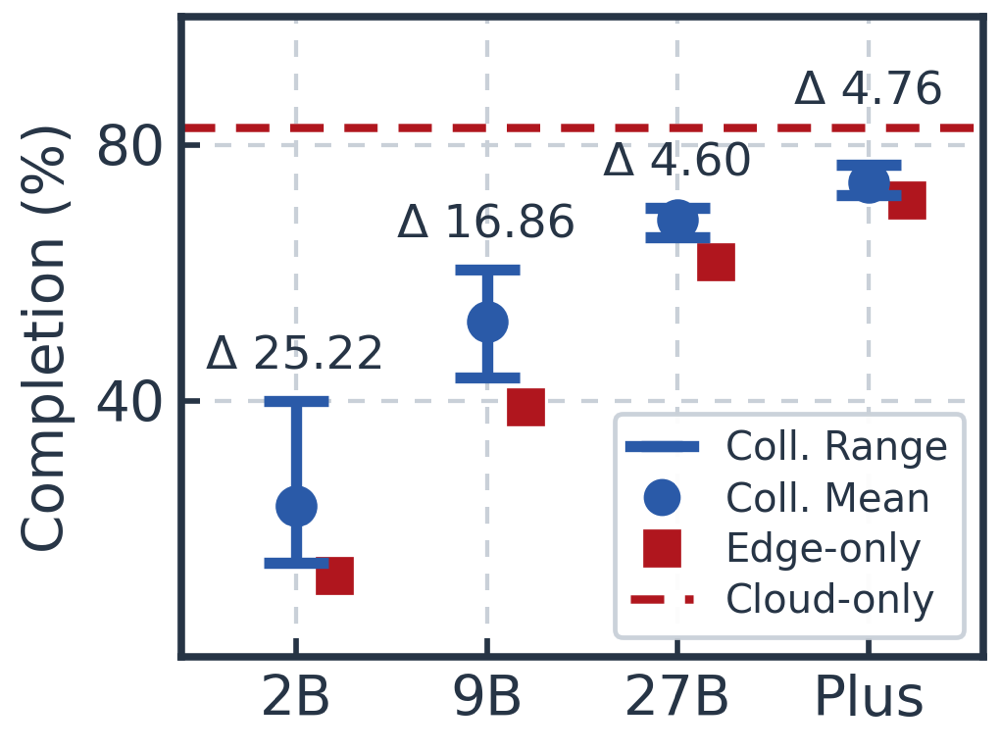
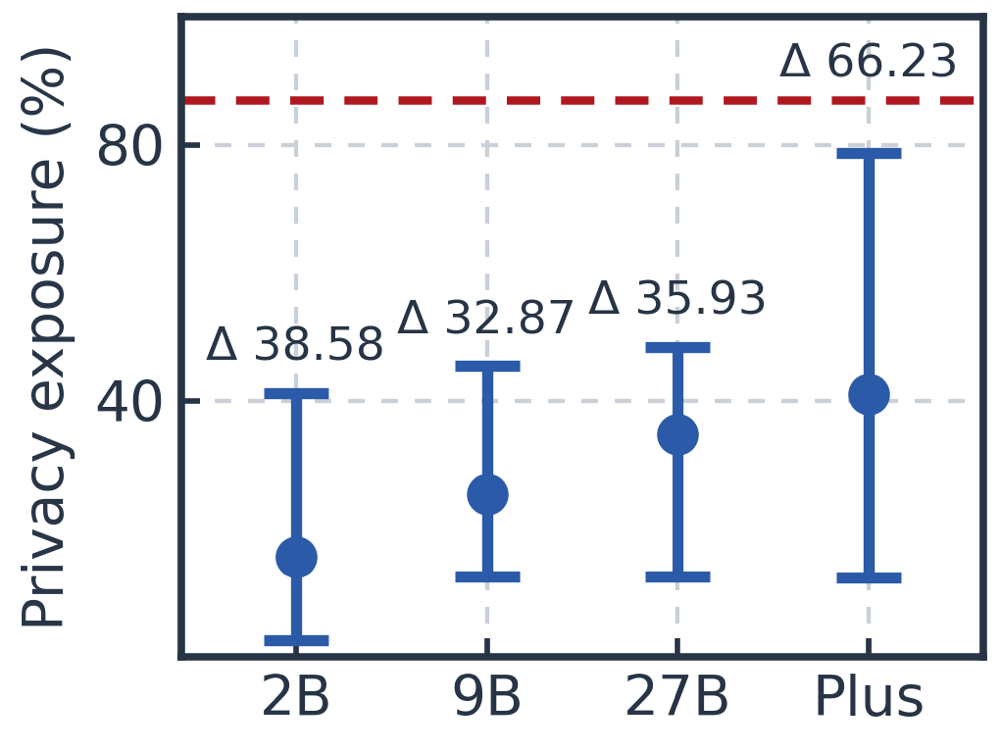
The completion gap across strategies narrows from 25.22 points (Qwen3.5-2B) to 4.76 (Qwen3.7-Plus). Exposure does not converge: with Qwen3.7-Plus, strategies differ by only 4.76 points in completion but by 66.23 in privacy exposure.

03

The best collaboration mode shifts

Weak edges do best when a router hands steps to the cloud to execute (2B: Per-step Routing 39.97 vs. Edge-Ctrl. Delegation 15.86). Stronger edges do best when they call the cloud themselves and only take its advice (Qwen3.7-Plus: Edge-Ctrl. Advisory 76.84).

04

Two edge-side skills make it work

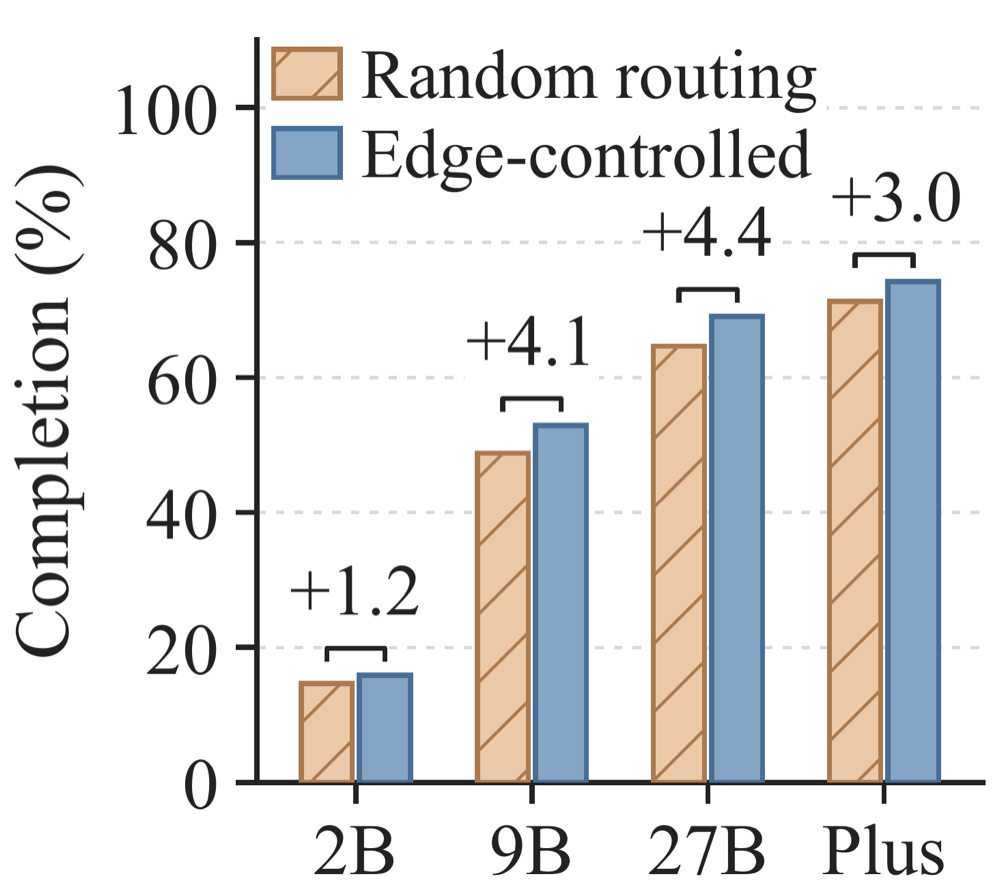
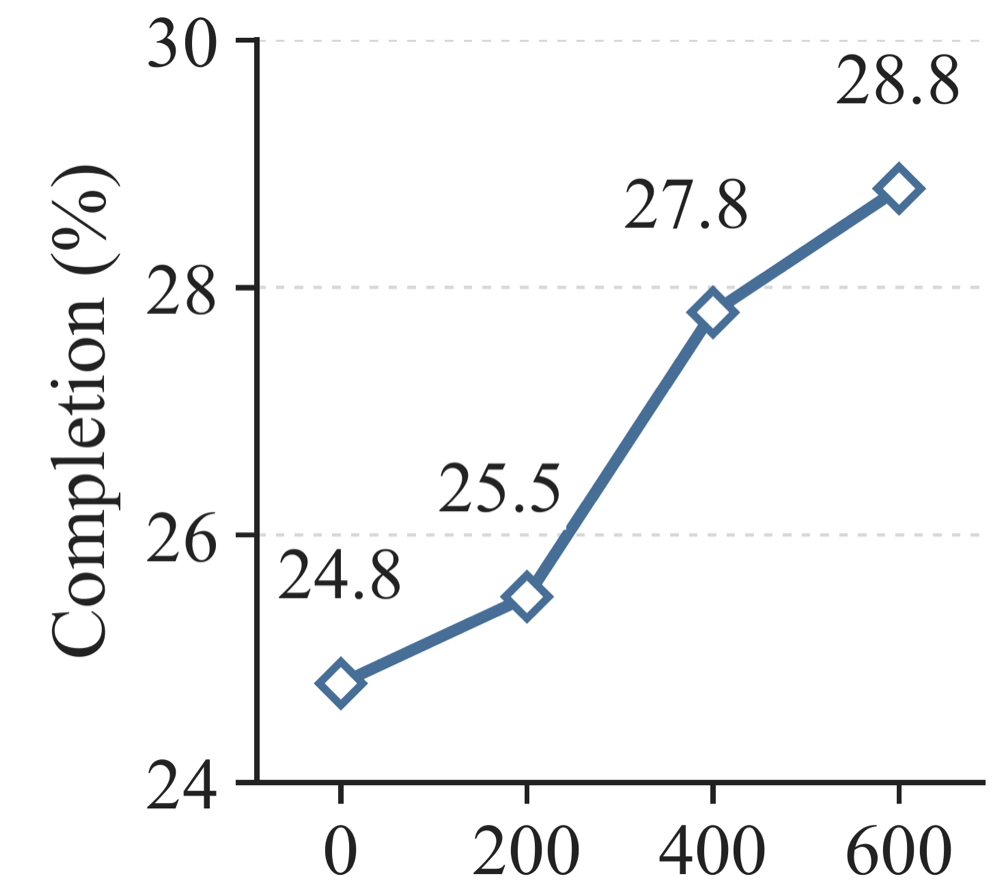
Knowing when to call the cloud (edge-controlled delegation beats a matched random-invocation baseline by up to +4.4) and following its guidance (instruction-following training raises advisory completion from 24.8 to 28.8).

Motivation

From one-shot routing to interleaved collaboration.

Edge devices run small models (typically ≤10B parameters) that keep data local but struggle with demanding planning and tool use. Cloud-hosted frontier models are far more capable, but costly, and they see whatever they are sent. Prior edge–cloud systems coordinate the two once per query. In long-horizon agent execution the cloud joins at different points along the trajectory, and each participation decision shapes later steps, accumulates cost, and determines how much workspace information leaves the device.

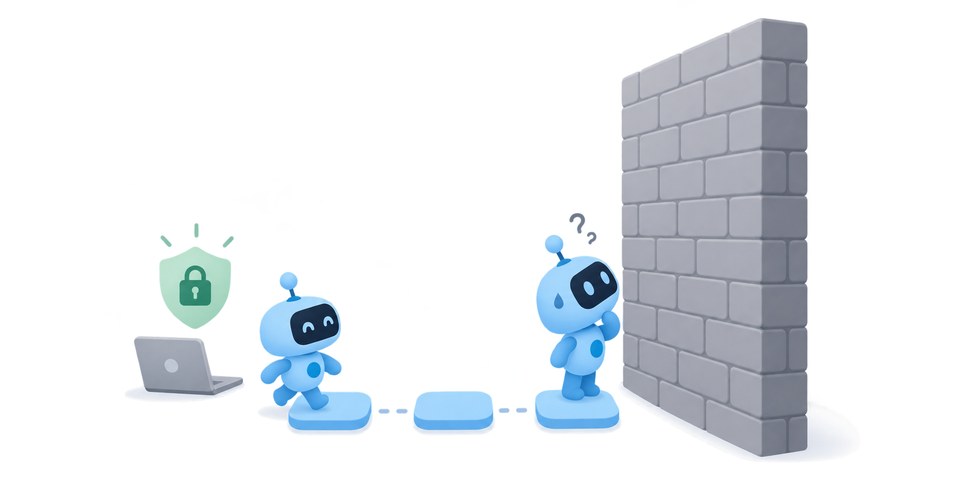
The edge robot walks a few steps and then stands puzzled in front of a tall brick wall; a padlock above the laptop shows the data stays local. Edge-only

Local, but limited

Every action comes from the on-device model. Nothing leaves the device, but long-horizon workspace tasks quickly hit a capability wall.

0% exposure12.75% completion (2B)
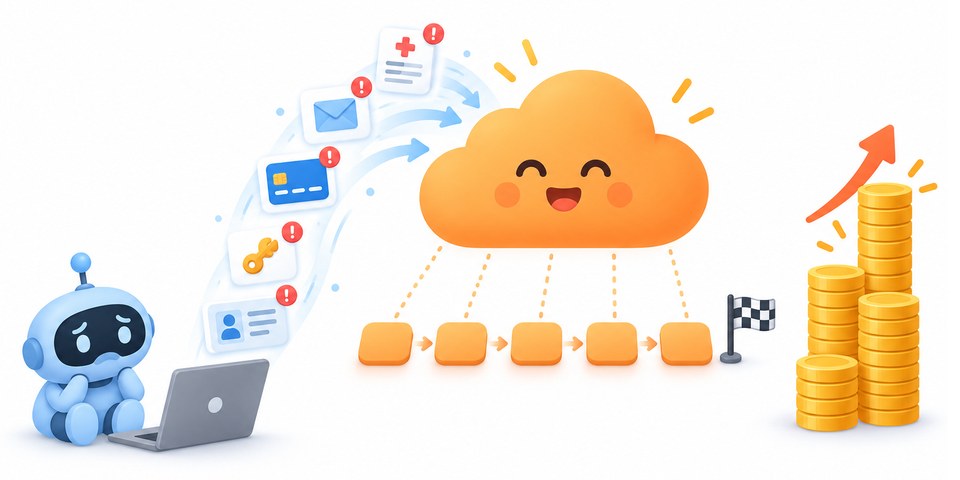
The cloud happily finishes every step while an ID card, key, credit card, email and medical record fly up from the laptop into it, next to a growing stack of coins. Cloud-only

Capable, but exposed

A frontier model runs every step and completes the most tasks, but most sensitive workspace data reaches the cloud, at the highest cost.

82.70% completion87.01% exposure
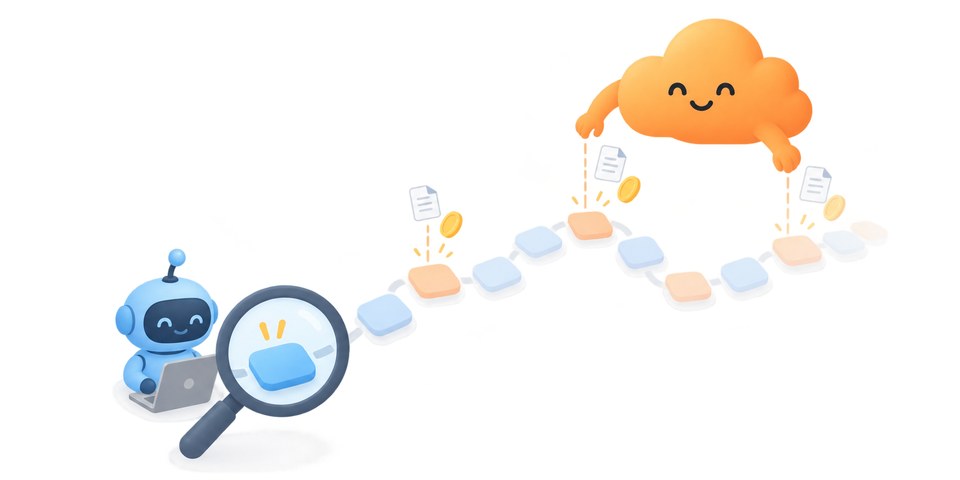
A magnifying glass examines only the first tile of a long path, while the cloud joins at several later points where documents and coins float away unexamined. Prior benchmarks

Queries, not trajectories

RouterBench, M4A1 and others only route a single query or turn. Cost and leakage that build up over a whole agent trajectory go unmeasured.

trajectory-level evaluation needed

We ask three research questions

  1. RQ1

    Does edge–cloud collaboration remain effective for realistic long-horizon agent execution?

  2. RQ2

    How does increasing edge capability impact edge–cloud collaborative execution?

  3. RQ3

    How should edge–cloud collaboration evolve as edge capability advances?

Evaluated Collaboration Strategies

Four ways to bring the cloud into an agent trajectory.

Two single-side baselines plus four representative collaboration strategies. They differ along two axes: who decides when the cloud participates (an external router or the edge agent itself), and what the cloud does once invoked (generate the action, or advise the edge).

Single-side baselines

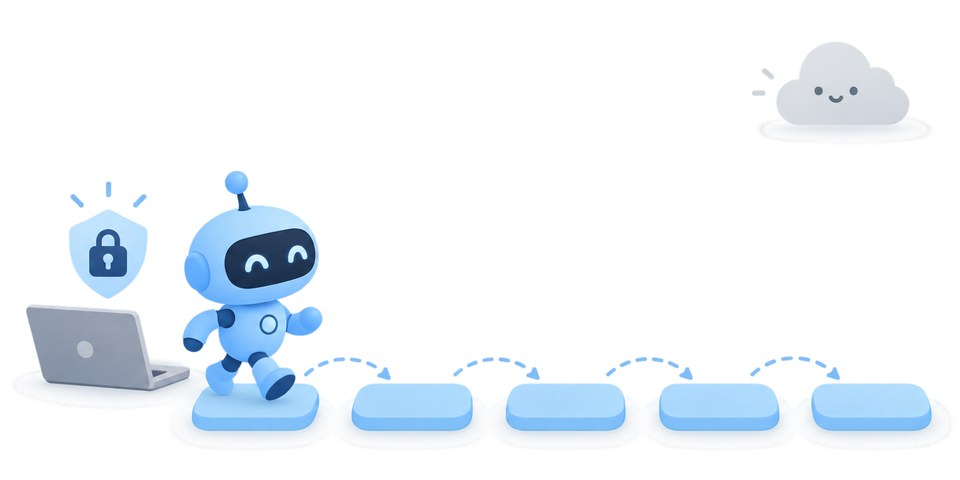
Edge-only The edge robot walks every step itself on blue tiles; the cloud stays far away and a padlock shows data stays on the device.

Every action is generated by the edge model. No exposure; capability bounded by the on-device model.

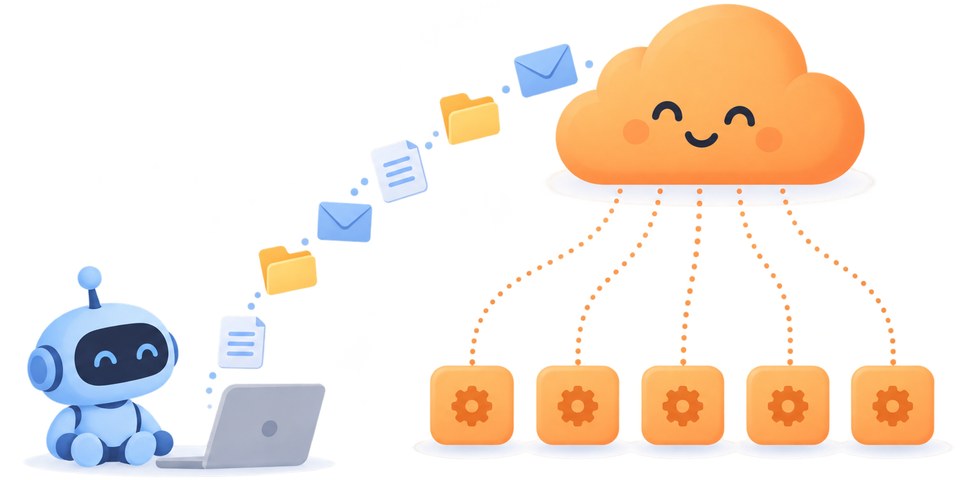
Cloud-only The cloud does every step on orange tiles while documents and folders from the laptop flow up into the cloud.

Every action is generated by the cloud model. The capability reference point, and the cost / exposure ceiling.

Externally routed a router decides

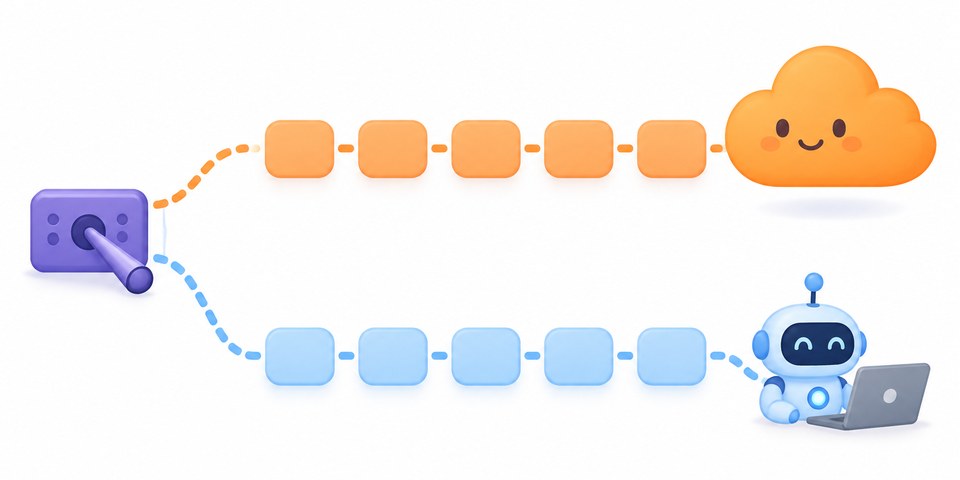
Query Routing A router lever at the start sends the whole task down one of two paths: all orange tiles to the cloud, or all blue tiles to the edge robot.
once, before executioncloud executes

A RouteLLM matrix-factorization router reads the task instruction once and sends the whole trajectory to either the edge or the cloud.

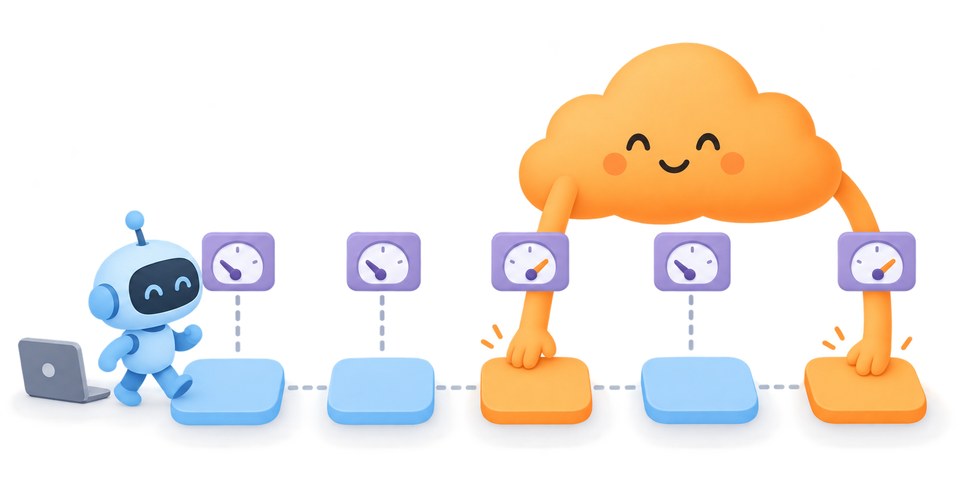
Per-step Routing A router gauge above every step decides who does it: the robot does most tiles, the cloud reaches down to do two of them.
at every stepcloud executes

Before every step, the edge model's next-token entropy (GlimpRouter-style) decides whether that step is generated by the edge or the cloud.

Edge-controlled the edge agent decides

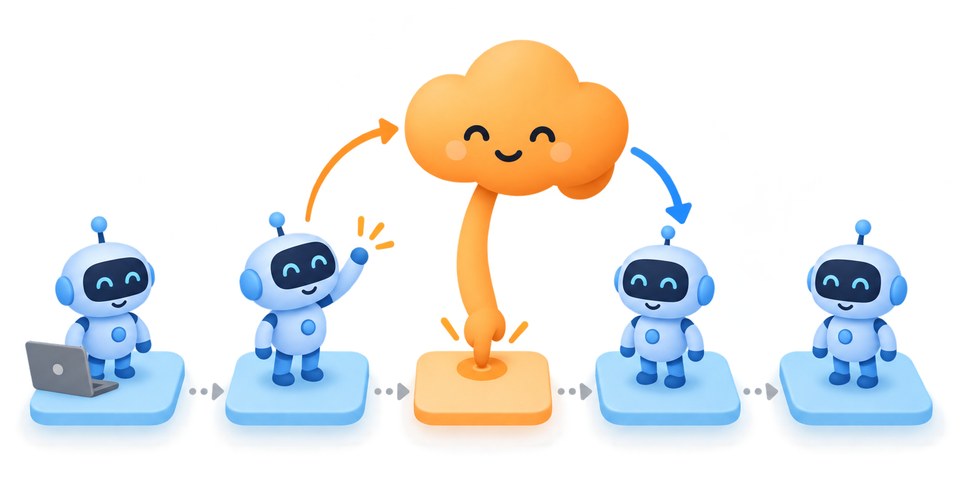
Edge-Ctrl. Cloud Delegation The robot hands the middle step up to the cloud, which presses that orange tile itself, then control returns to the robot.
when the edge askscloud executes

Execution stays on the edge. Through a delegation tool, the edge agent hands the current step to the cloud, which generates the next action before control returns.

Edge-Ctrl. Cloud Advisory The robot does every step itself; at the middle step it asks the cloud a question and gets back a lightbulb and a map as advice.
when the edge askscloud advises

Execution stays on the edge. The agent asks the cloud for plans, suggestions, or corrections, then generates the action itself.

Benchmark

EC²-Bench: edge–cloud collaboration, evaluated over the whole trajectory.

Edge–Cloud Collaborative Agent Benchmark. 128 executable digital-workspace tasks, adapted from six agent benchmarks plus 7 newly built ones, run in one OpenClaw runtime, and filtered so that edge-only, cloud-only, and collaborative execution can actually differ. Every run records what the cloud saw at each step; 100 tasks carry fine-grained sensitivity annotations, so that exposure can be audited.

Task Performance

Did the agent get the job done? Task-specific weighted checks (rule-based validation, environment-state auditing, and rubric-based LLM-as-a-judge) yield a completion score, and Pass3 requires success in all three runs.

Resource Usage

What did it cost? Cloud input, cache-read, and output tokens with their USD price, plus edge-side FLOPs (2·Nact·T). They are reported as a profile, never collapsed into one number.

Privacy Exposure

What reached the cloud? The fraction of annotated sensitivity units (personal and organizational, 12 categories) disclosed in any cloud-visible context. An LLM judge catches paraphrased leaks with 96.9% F1 against human labels.

Task categories
  • Office & Daily Tasks · 36
  • Information Search & Gathering · 34
  • Safety & Security · 21
  • Development & Operations · 14
  • Data Analysis · 13
  • Automation · 10

How EC²-Bench differs from prior benchmarks

Benchmark Evaluation scenario Collab. modes Evaluation dimensions
RouterBenchGeneral LLM tasksRqTask perf. / Cost
LLMRouterBenchGeneral LLM & tool-use tasksRqTask perf. / Cost
LLMSwitchBenchSingle-turn queriesRqTask perf. / Cost
M4A1Multi-turn dialogueRsTask perf. / Cost / Latency
EC²-BenchLong-horizon agent executionRq, Rs, D, ATask perf. / Resource / Privacy

Rq / Rs: query-level / per-step routing; D / A: edge-controlled cloud delegation / advisory.

Main Results

Main results across all configurations.

Paper Table 2: completion, Pass³, cloud tokens, cloud cost, edge FLOPs, and privacy exposure for edge-only (Qwen3.5-2B/9B/27B, Qwen3.7-Plus), cloud-only (DeepSeek-v4-Pro, GLM-5.3), and the four collaboration strategies under each edge model, with GLM-5.3 as the cloud model.
Main results (paper Table 2). Cloud model: GLM-5.3; each configuration is averaged over 3 runs. Cloud Tok. (R/C/O) = raw input / cache-read / output tokens in millions; cloud cost in USD; edge FLOPs in PetaFLOPs. Privacy exposure is the share of annotated sensitive units visible to the cloud (lower is better). Results with DeepSeek-V4.1-Flash as the cloud model are in Appendix A.8 of the paper.
Key Findings

Three research questions, answered.

Each research question is answered with the corresponding figure from the paper.

RQ1 · Effectiveness

Does edge–cloud collaboration remain effective for long-horizon agent execution?

Yes. Collaboration sits between the two extremes, and often above them.

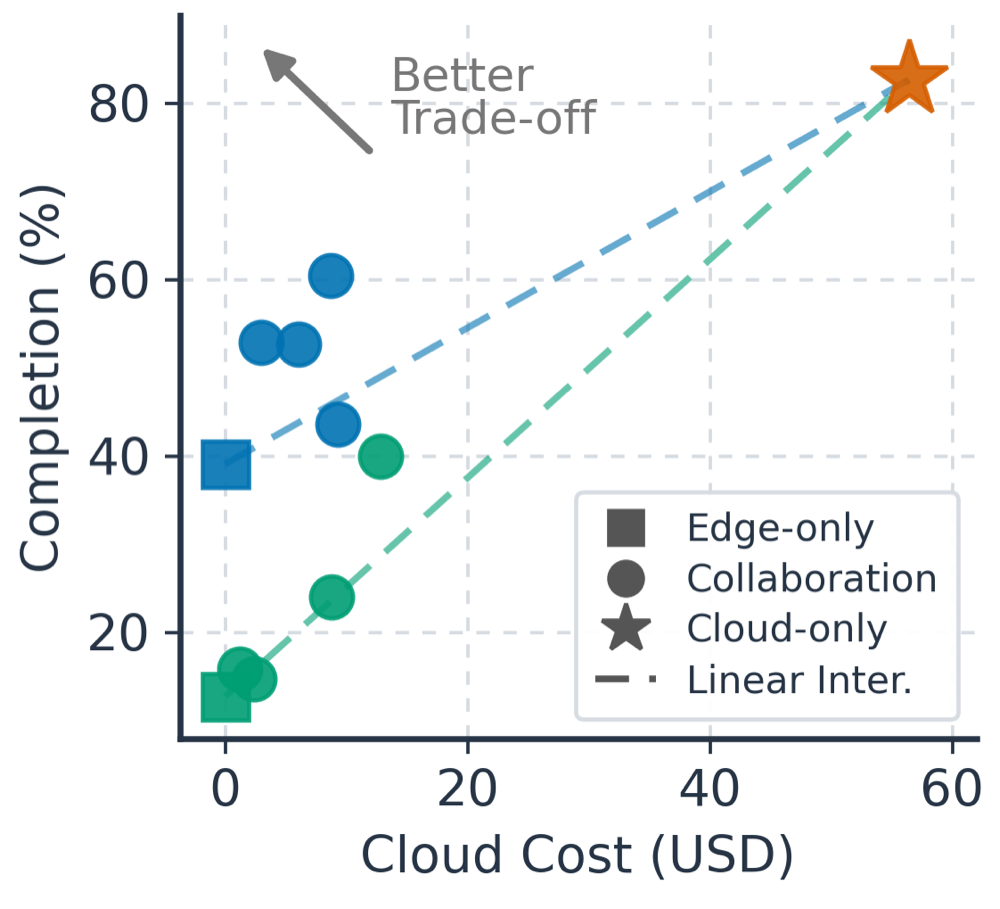
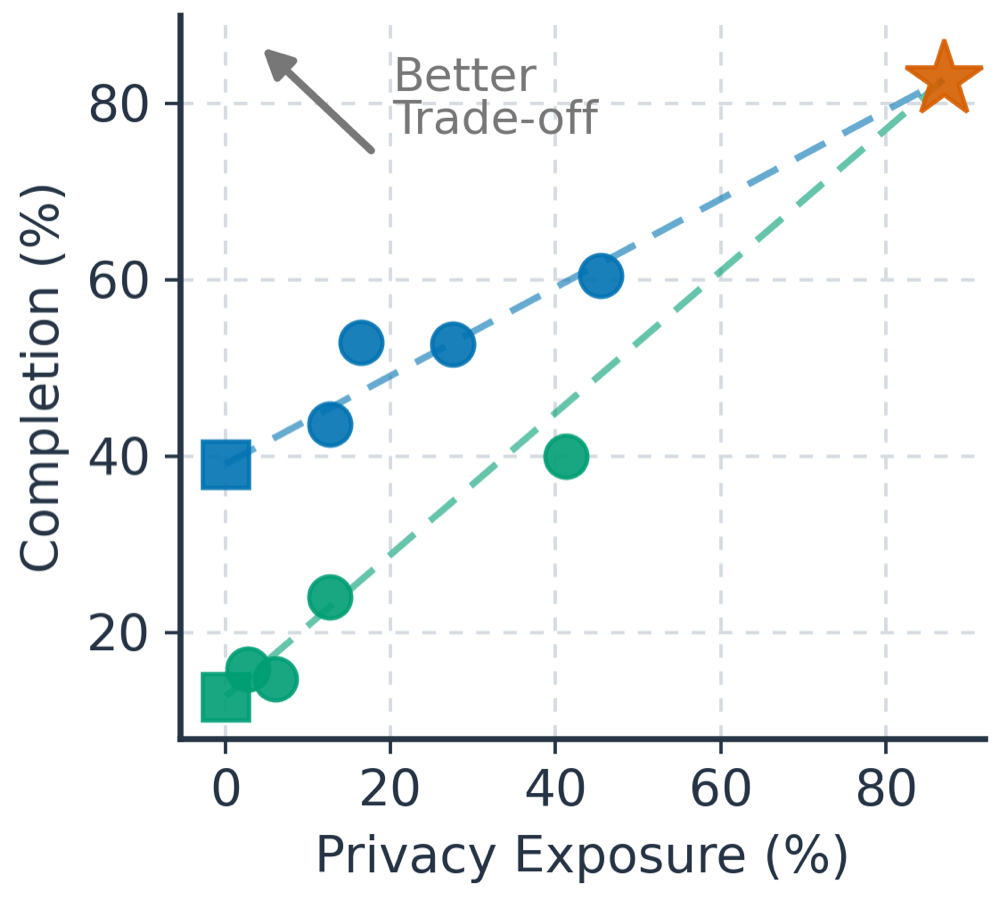
Cloud-only execution performs best but has the highest cloud cost and exposure; edge-only avoids both but loses performance. Collaboration fills the space in between: with Qwen3.5-2B, Per-step Routing lifts completion from 12.75 to 39.97 at 22.7% of cloud-only cost. Several configurations lie above the dashed line joining edge-only and cloud-only, so they beat a proportional mix of the two.

Cloud cost versus completion for Qwen3.5-2B and Qwen3.5-9B with GLM-5.3: several collaboration points lie above the dashed line from edge-only to cloud-only. Privacy exposure versus completion for Qwen3.5-2B and Qwen3.5-9B with GLM-5.3.
Figure 2. Qwen3.5-2B (green) and Qwen3.5-9B (blue) with GLM-5.3 as the cloud model: (a) cloud cost vs. completion, (b) privacy exposure vs. completion. Squares: edge-only; circles: the four collaboration strategies; star: cloud-only. Upper-left is better.
RQ2 · Edge capability

How does increasing edge capability impact collaborative execution?

Stronger edges close the performance gap, not the privacy gap.

The best collaborative configuration climbs from 39.97 (2B) to 76.84 (Qwen3.7-Plus), approaching cloud-only's 82.70, and the completion gap across strategies narrows from 25.22 points to 4.76. Privacy exposure does not converge: with Qwen3.7-Plus, strategies differ by only 4.76 points in completion but by 66.23 in exposure.

Task completion across edge models 2B, 9B, 27B and Plus: the mean of collaboration configurations rises toward cloud-only, and the range across strategies narrows from 25.22 points (2B) to 4.76 (Plus). Privacy exposure across edge models: the range across collaboration strategies stays wide, between 32.87 and 66.23 points.
Figure 3. Mean (dot) and range (bar) across collaboration strategies for each edge model. (a) The completion range narrows from 25.22 points (Qwen3.5-2B) to 4.76 (Qwen3.7-Plus). (b) The privacy-exposure range stays wide, reaching 66.23 points with Qwen3.7-Plus.
RQ3 · Collaboration shift

How should edge–cloud collaboration evolve as edge capability advances?

From router-controlled cloud execution to edge-controlled cloud advice.

With Qwen3.5-2B, externally routed strategies win (Per-step Routing 39.97 vs. Edge-Ctrl. Delegation 15.86), and a cloud that executes beats one that advises. As edge capability grows, both orderings reverse: from 9B upward, Edge-Ctrl. Advisory is best, reaching 76.84 with Qwen3.7-Plus. Two edge-side abilities stand behind the shift: deciding when to call the cloud, and following its guidance.
Edge-controlled delegation versus a matched random-invocation baseline: gains of +1.2 for 2B and +3.0 to +4.4 for stronger edge models. Qwen3.5-2B completion under fixed cloud advisory during instruction-following training rises from 24.8 to 28.8 over 600 steps.
Figure 4. (a) Edge-controlled delegation vs. a random baseline with the same cloud-call rate: +1.2 for 2B, +3.0 to +4.4 for stronger edges. (b) Under fixed cloud advisory, instruction-following RL on Qwen3.5-2B raises completion from 24.8 to 28.8 while edge-only performance stays flat.

The takeaway: future edge models should be optimized not only for standalone capability but for collaboration itself, deciding when to call the cloud and making good use of what it returns. Because performance converges while exposure does not, privacy becomes the key differentiator among strategies.

Resources & Citation

Reproduce it, extend it, cite it.

BibTeX

@misc{huang2026ec2bench,
  title  = {Empowering Edge Agents: A Systematic
            Analysis of Edge-Cloud Collaboration
            in LLM Agent Execution},
  author = {Huang, Pengcheng and Liu, Zhenghao and
            Ren, Shixin and Yu, Shi and Yao, Sijia
            and Yan, Yukun and Xiao, Chaojun and
            Sun, Maosong},
  year   = {2026},
  url    = {https://github.com/OpenBMB/EC2-Bench}
}

Authors

  1. Pengcheng Huang1
  2. Zhenghao Liu1*
  3. Shixin Ren2
  4. Shi Yu2
  5. Sijia Yao3
  6. Yukun Yan2*
  7. Chaojun Xiao2*
  8. Maosong Sun2
  • 1 Northeastern University, Shenyang
  • 2 Tsinghua University, Beijing
  • 3 China Mobile Online Services

* Corresponding authors